Land & sea · 1867–68
The Children of Captain Grant
The 37th parallel south
A damaged message preserves a single coordinate: 37° 11′ south. The search follows that latitude across Patagonia, Australia, and New Zealand.
180°
Route continues across 180°Crosses 180°
01Glasgow
Departure · 01 / 08
GlasgowThe Duncan sails from the Clyde.
The search begins in Scotland after the damaged message is recovered. The yacht crosses the Atlantic and makes for Patagonia’s eastern coast.
GlasgowTabor Island
MachineDuncan / overland expedition
Distance≈ 28,000 km reconstructed
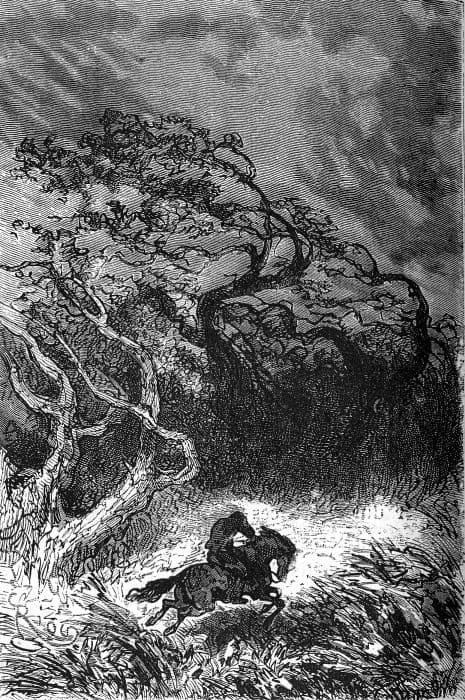 Édouard Riou, 1868
Verne says
Could a condor carry Robert away?
3.2 mAndean condor wingspan
15 kgMaximum adult mass
A childThe novel’s payload
An Andean condor can span more than a small car. Verne gives that real visual scale enough imagined lifting power to carry Robert.
Fact-check
Huge wings are built for gliding, not cargo
≤15 kgMass of the bird itself
6.8 kgA large meal can prevent take-off
No talonsFeet are not strong graspers
Robert would outweigh the condor, whose feet also lack an eagle’s grip. A condor could menace a child on the ground. Sustained flight with that load is impossible.
The book in pictures
Original plates and later editions show how each generation pictured the same journey.


