AV Atlas Verne

Space · 1865–70

From the Earth to the Moon

Tampa Bay launch site · Earth–Moon flight

The Columbiad launches from Florida. A bolide’s gravity nudges the projectile off course; it loops around the Moon, fires its rockets at the second neutral point, and returns to the Pacific.

Tampa Bay and Stone’s HillA geographic map of west-central Florida locating Tampa Town, Stone’s Hill at 27 degrees 7 minutes north, and Verne’s fictional fifteen-mile works railway.Gulf of MexicoN ↑15-mile works railwayFLORIDA LAUNCHTampa BayThe Gun Club’s construction baseStone’s Hill · 27° 7′ NVerne’s fictional launch site southeast of TampaThe map ends here. The flight is plotted separately below.
Earth–Moon free-return trajectoryA deliberately not-to-scale diagram of one continuous journey. The solid outbound path leaves Earth, passes stop three at the bolide encounter without a visible change to the plotted curve, crosses toward the Moon, bends once around it, and becomes a dashed return path to Earth.EARTHMOONTHE BOLIDE DEFLECTIONNo collision · its gravity nudges the projectile off courseTWENTY ROCKETS FIRED8 Dec · intended to turn the projectile MoonwardDIAGRAMMATIC · NOT TO SCALE
Outbound coast Earthward coastVerne’s sequence · Earth–Moon free return
Florida base · 01 / 08
Tampa Town

Materials and spectators arrive through Tampa Bay.

Tampa Town becomes the expedition’s port and logistical base. Verne connects it to the inland works by a purpose-built railway fifteen miles long.
Tampa TownPacific return
MachineColumbiad / aluminum projectile
Distance≈ 768,000 km return journey
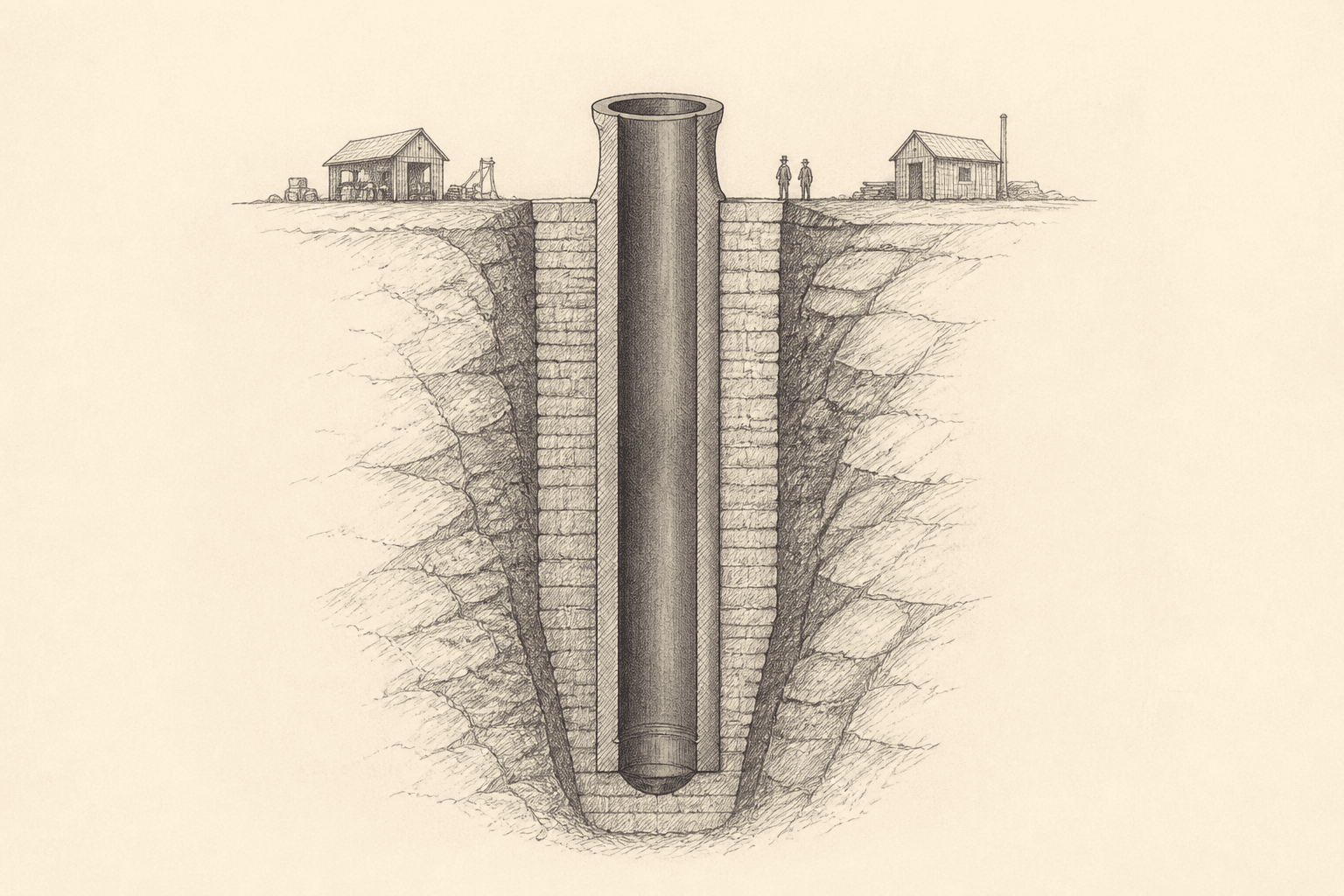
Simple sectional sketch of the vertical Columbiad cannon sunk into Stone’s Hill
01The ColumbiadVertical section through Stone’s Hill
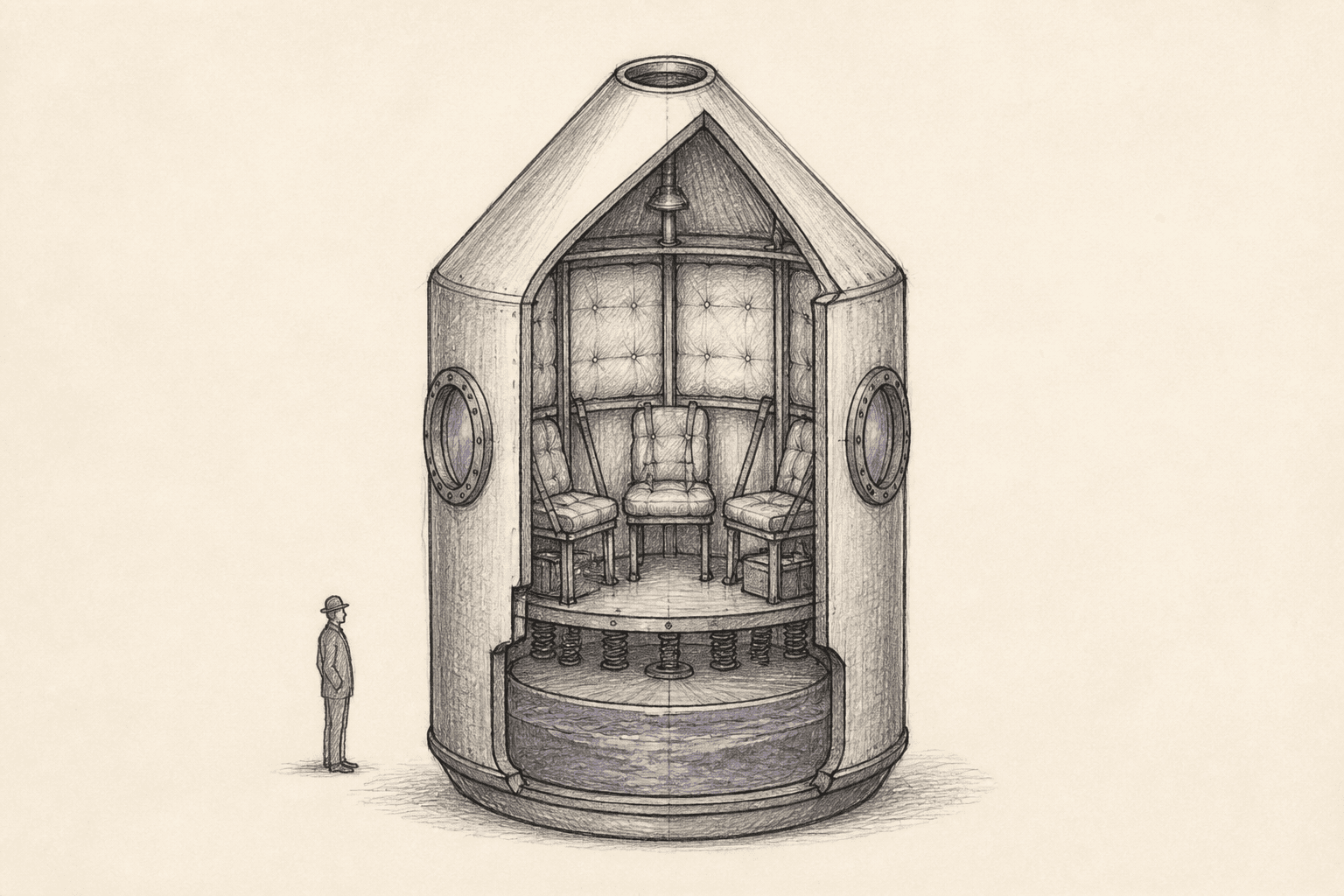
Simple cutaway sketch of Verne’s cylindro-conical aluminum passenger projectile
02The projectilePassenger capsule and water buffer
AI image generation · Based on Verne’s specifications
The cannon and its passenger carTwo simple studies separate the machines: the 274-meter Columbiad sunk into Stone’s Hill, and Verne’s 4.6-meter cylindro-conical aluminum projectile.

Verne says

Could the Columbiad launch people to the Moon?

3 crewTravelers inside the projectile
274 mLength of the cannon
11.2 km/sApproximate escape speed
≈23,000 gAcceleration inside the barrel

A gun can throw an instrument toward space, but delivering escape speed within Verne’s barrel would crush the crew before the projectile met the atmosphere.

Fact-check

Apollo 8 repeated the mission outline

3 crewApollo 8 crew
6.9 gPeak crew load during re-entry
FloridaChosen as the launch region
PacificReturn and recovery

Verne describes three people in a crewed capsule, weightlessness, a lunar flyby, and ocean recovery after a Florida launch. Apollo 8 repeated this outline in 1968; its highest crew load was a brief 6.9 g during re-entry, not the Columbiad’s unsurvivable acceleration.

Next in the atlas05 / 06
The Mysterious Island

A field survey of Lincoln Island